
IT Campus Logo

Course details

DevOps Engineer

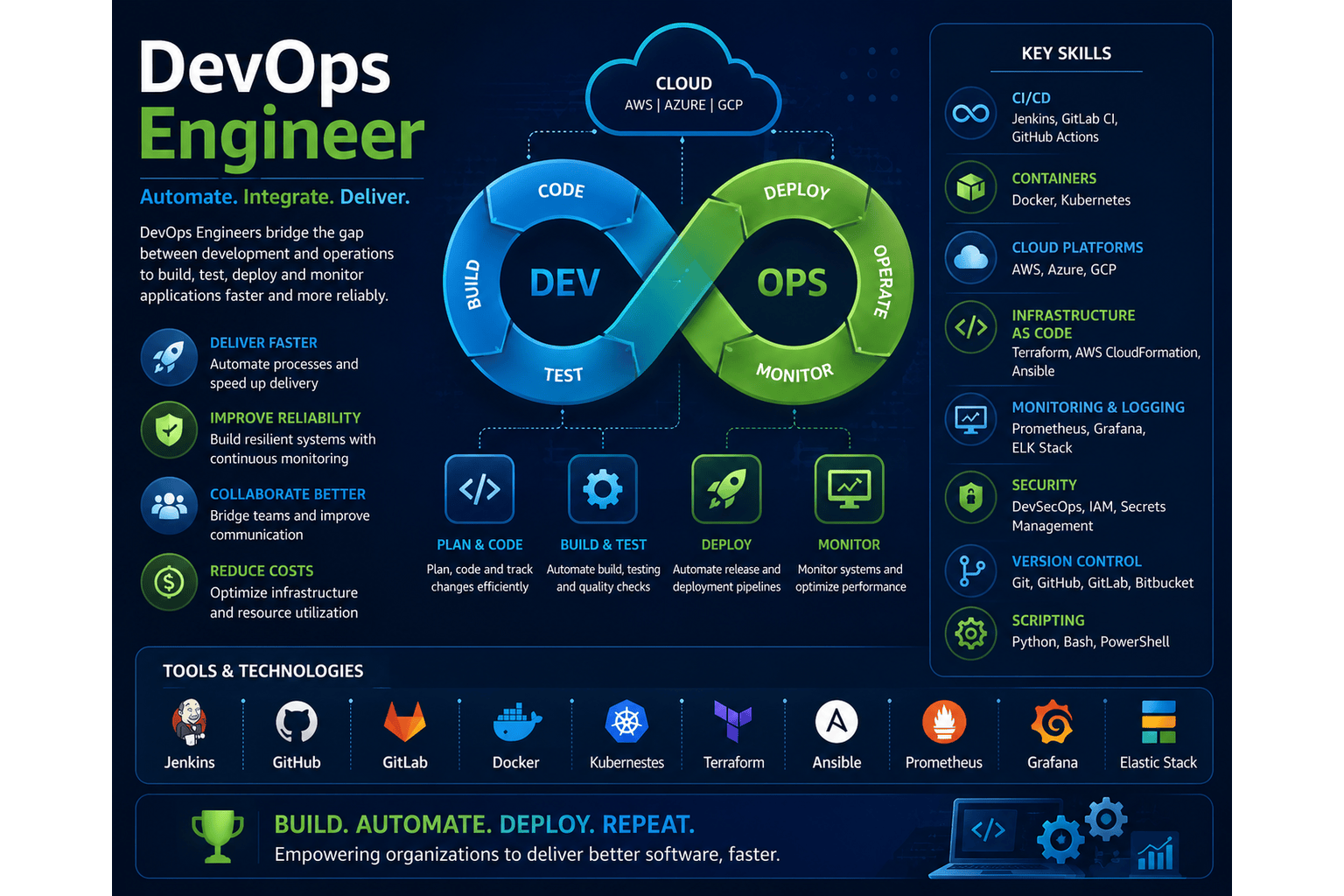
The DevOps Engineer course is designed to equip learners with the knowledge and practical skills required to automate software development processes, manage cloud infrastructure, and implement modern DevOps practices. This course covers essential DevOps concepts including continuous integration, continuous delivery (CI/CD), cloud platforms, infrastructure automation, containerization, monitoring, and collaboration practices.

Through hands-on labs and real-world projects, learners will gain experience with industry-standard tools such as Git, Linux, Docker, Kubernetes, Jenkins, Terraform, Ansible, and cloud platforms including AWS and Azure.

This course is ideal for software developers, system administrators, cloud engineers, IT professionals, and beginners who want to build a successful career in DevOps engineering and cloud automation.

The DevOps Engineer course focuses on bridging the gap between software development and IT operations by introducing automation-driven development and deployment practices. Learners will understand how modern organizations build, test, deploy, monitor, and maintain applications using DevOps methodologies.

The course provides practical knowledge of source code management, CI/CD pipelines, cloud infrastructure management, container orchestration, configuration management, security practices, and monitoring solutions.

By the end of this course, learners will be able to design automated deployment workflows, manage scalable infrastructure, and implement DevOps solutions aligned with industry standards.

Course Objectives

After completing this course, learners will be able to:

  • Understand DevOps principles, culture, and lifecycle.
  • Learn Linux administration and command-line fundamentals.
  • Manage source code using Git and GitHub.
  • Build automated CI/CD pipelines.
  • Implement continuous integration and continuous deployment workflows.
  • Work with Docker containers and container images.
  • Manage containerized applications using Kubernetes.
  • Automate infrastructure provisioning using Terraform.
  • Configure systems using Ansible automation.
  • Deploy and manage applications on AWS and Azure cloud platforms.
  • Implement monitoring, logging, and troubleshooting solutions.
  • Apply DevOps security practices and automation best practices.

This module-based curriculum is designed to help learners master DevOps concepts, tools, and practices including Git, Jenkins, Docker, Kubernetes, Terraform, Ansible, AWS, Azure, CI/CD pipelines, cloud automation, and DevSecOps strategies required for a successful DevOps Engineer career.

  • Module 1: Introduction to DevOps
    • What is DevOps?
    • DevOps Culture and Principles
    • DevOps Lifecycle
    • Benefits of DevOps Implementation
    • Agile and DevOps Relationship
    • DevOps Roles and Responsibilities
    • DevOps Tools Overview
  • Module 2: Linux Administration Fundamentals
    • Linux Operating System Basics
    • Linux File System Structure
    • Command Line Operations
    • File and Permission Management
    • User and Group Management
    • Package Management
    • Shell Scripting Basics
    • Linux Server Administration
  • Module 3: Version Control with Git and GitHub
    • Introduction to Version Control Systems
    • Git Installation and Configuration
    • Git Commands and Workflows
    • Branching and Merging Strategies
    • Working with Remote Repositories
    • GitHub Repository Management
    • Collaboration Using Pull Requests
  • Module 4: Continuous Integration and Continuous Delivery (CI/CD)
    • CI/CD Concepts and Benefits
    • Build and Release Automation
    • Jenkins Installation and Configuration
    • Creating Jenkins Pipelines
    • Automated Testing Integration
    • Deployment Strategies
    • CI/CD Best Practices
  • Module 5: Docker and Containerization
    • Introduction to Containers
    • Docker Architecture
    • Installing and Configuring Docker
    • Docker Images and Containers
    • Dockerfile Creation
    • Docker Networking and Storage
    • Docker Compose
    • Container Deployment Practices
  • Module 6: Kubernetes Container Orchestration
    • Introduction to Kubernetes
    • Kubernetes Architecture
    • Pods, Nodes, and Clusters
    • Deployments and Services
    • ConfigMaps and Secrets
    • Kubernetes Networking
    • Scaling Applications
    • Kubernetes Deployment Strategies
  • Module 7: Infrastructure as Code (IaC)
    • Introduction to Terraform
    • Terraform Architecture
    • Providers and Resources
    • Terraform Configuration Files
    • State Management
    • Creating Cloud Infrastructure
  • Module 8: Cloud DevOps (AWS & Azure)
    • Cloud Computing Fundamentals
    • DevOps on AWS
    • DevOps on Microsoft Azure
    • Cloud Infrastructure Management
    • Virtual Machines and Networking
    • Cloud Storage Services
    • Cloud Deployment Automation
    • Cloud Security Fundamentals
  • Module 9: Monitoring and Logging
    • Importance of Monitoring in DevOps
    • Application and Infrastructure Monitoring
    • Prometheus Overview
    • Grafana Dashboards
    • Log Management Concepts
    • ELK Stack Overview
    • Performance Monitoring and Troubleshooting
  • Module 10: DevOps Security (DevSecOps)
    • Introduction to DevSecOps
    • Security in CI/CD Pipelines
    • Vulnerability Management
    • Secret Management
    • Secure Code Practices
    • Cloud Security Best Practices
  • Module 11: DevOps Career & Certification Preparation
    • DevOps Engineer Role Overview
    • Industry Best Practices
    • Interview Preparation
    • DevOps Career Roadmap
instructor
Fahad Imtiaz

Fahad Imtiaz is a Multi-Cloud Solutions Architect, and Principal DevOps Engineer, with 10+ years of industry experience. Passionate about empowering the next generation of IT professionals, he delivers hands-on training in Cloud Computing, DevOps, Cyber Security, and AI while helping organizations successfully implement modern cloud and infrastructure solutions.

Enrolling in an IT Campus short course is quick and easy.

Option 1: Download the Enrollment Form, complete it, and email the filled form to enroll@theitcampus.com.

Option 2: Click the Enroll Now button to complete and submit the online enrollment form.

Once we receive your application, our admissions team will review it and contact you with the next steps, including course confirmation and payment details.

Course Features

  • Course duration 3 Months (12 Weeks)
  • Training Mode Online/Onsite
  • Domain DevOps Engineer
  • Level Advance
  • Practice Questions YES
  • Training Certification YES

Course Fee : 60,000 PKR

WhatsApp